
Simple Batik Wall Hanging with Glue Resist
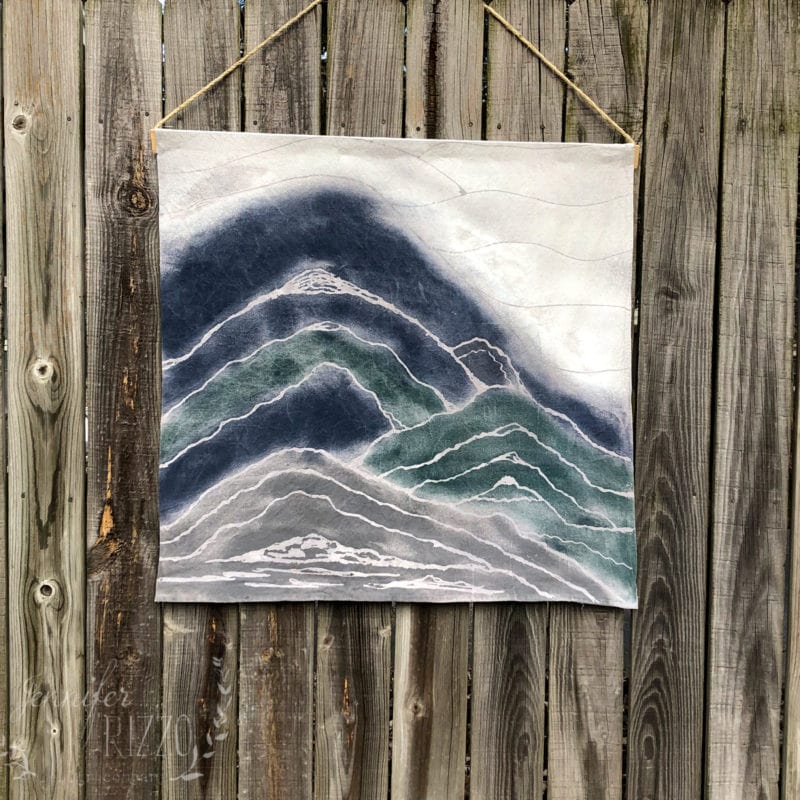
Have you ever made glue resist art before? Glue resist dying is a form of batik. If you aren’t familiar with glue resist, it’s a technique using a medium such as glue or wax on fabric or another surface to cover the bottom layer. With resist painting, you then apply a layer of resist, then another layer over it with another medium such as paint, or dye. Then, you remove the resist medium to reveal the layer underneath. This is often used in silk scarf dying, and in watercolor (on paper) with a material called frisket. Resist art is fun, because it really opens up possibilities when you want to bring another layer of color in, or even just negative white space.
This post contains affiliate links. See our sponsor and affiliate disclosure here.
Supplies for Glue Resist Painting
-Painter’s tarp
-White craft glue
-Acrylic Paint
-Paint Sprayer or brush
-Dowel Rod or 2″ wood lath
-Rope or twine
-Hot Glue
Cut the Painter’s Tarp to Size
Painter’s tarp is inexpensive to use and can be cut to any size. Just cut the tarp to size with two extra inches around for finishing off the edges later, and an extra 3-4 inches at the top for hanging.
Apply White Craft Glue as a Resist
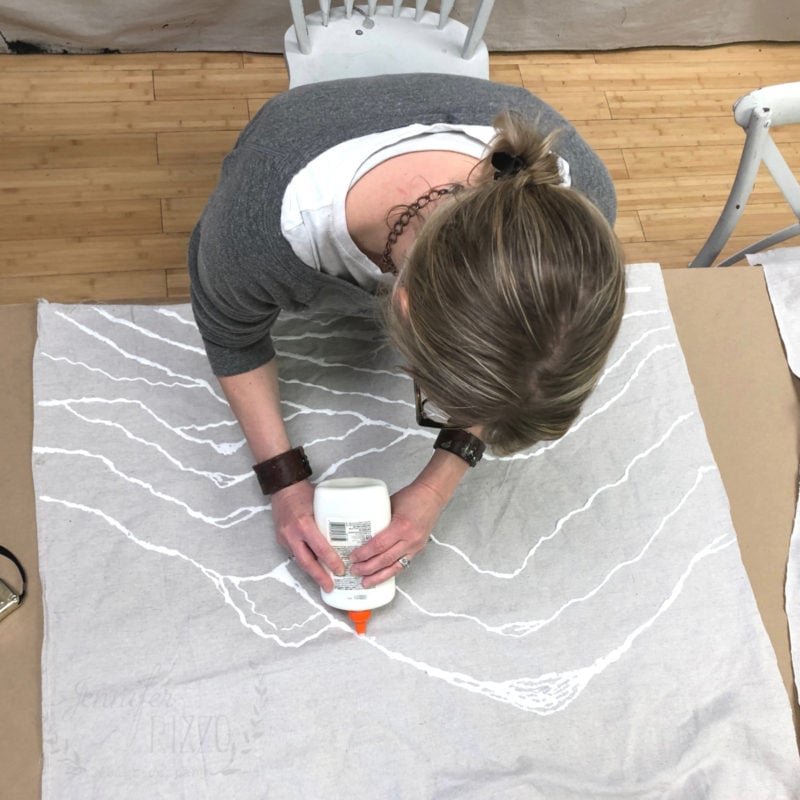
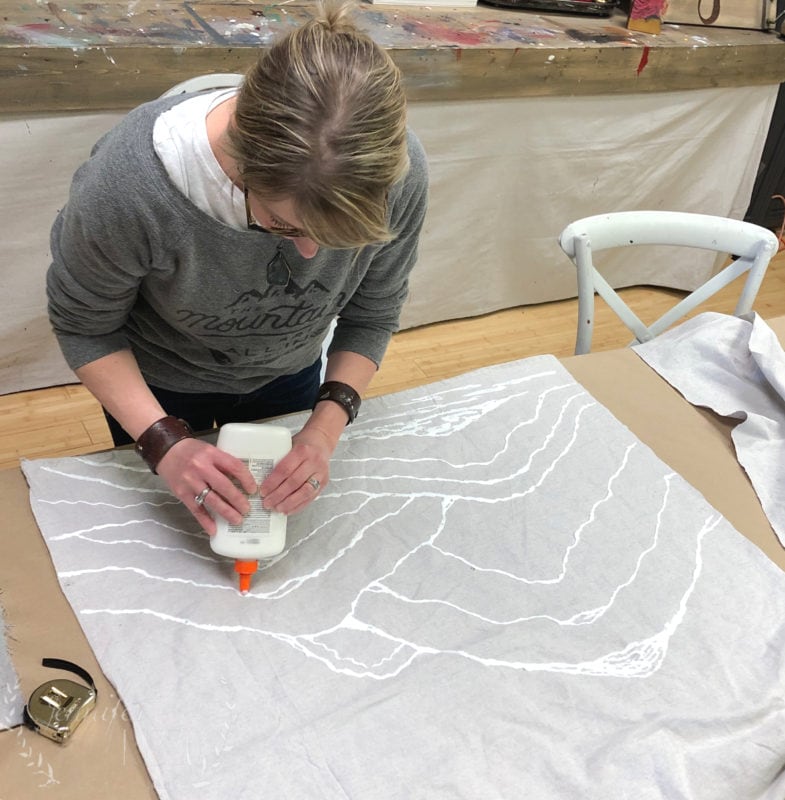
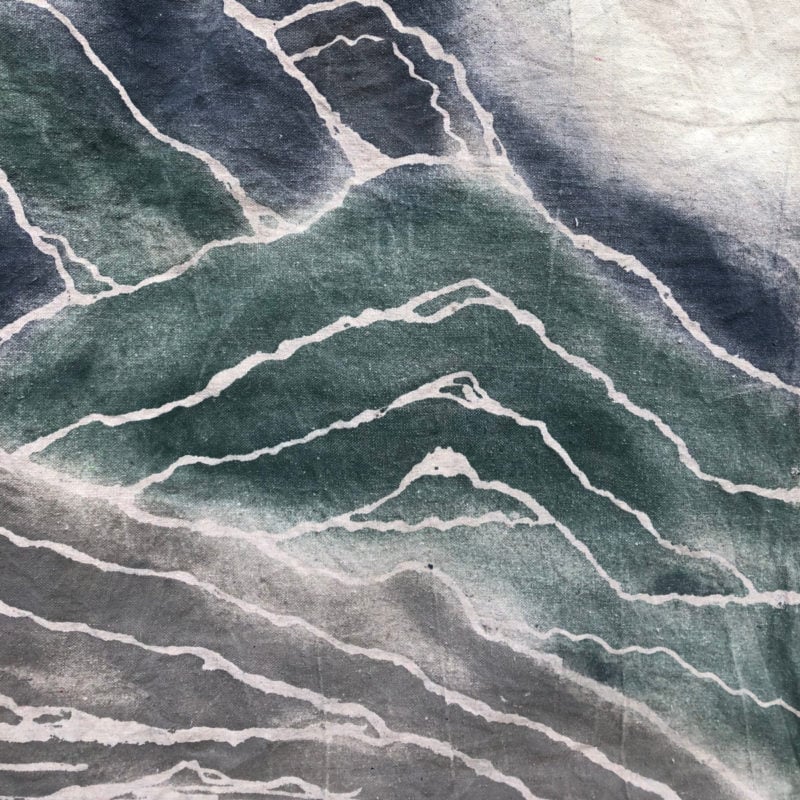
Use the tip of the white craft paint to apply the glue in an abstract pattern. By adding the glue in abstract lines it will resemble a mountain range or landscape. Once the pattern is done, let the glue dry completely.
Apply the Paint to the Canvas
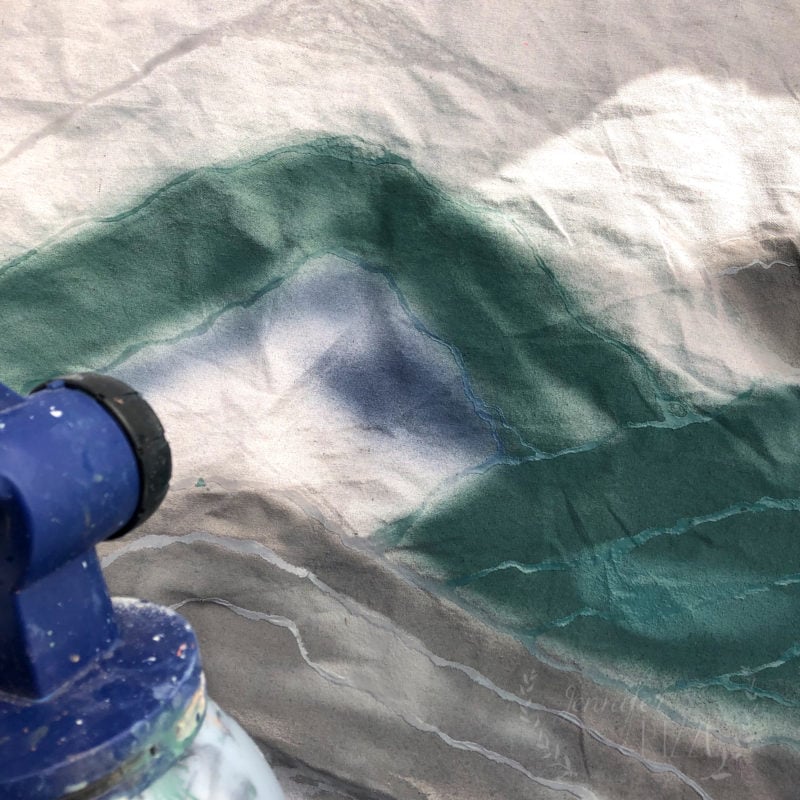
Once the glue is completely dry paint over the glue. Acrylic paint can be used for this project since it’s not a wearable item and won’t be washed on a regular basis. I layered the colors in greens and blues to give it a landscape-style look for the “mountains” and white paint for the sky so it had abstract style lines. By painting the sky in white, it allows the canvas to show through as a canvas color for contrast. I used a paint sprayer to apply my paint but it can also be brushed on. I really liked being able to use the paint sprayer to evenly apply the paint. It made it super easy to get an even coat! If you don’t have a paint sprayer you can also brush the paint onto the tarp with a brush or dilute the paint in regular pump sprayers to apply.
Remove the Glue Resist in Warm Water
Once the paint is dry, soak the canvas in warm water until the glue softens and starts to dissolve. Rub the glue gently remove. Once all of the glue is removed, let the canvas dry flat. Once you remove the glue resist layer, you get this really cool look! I am excited to break this technique out for other projects, including DIY fabric with fabric paint. See how to glue batik here.
Hang the Canvas
Once the paint is dry, fold over the edges and glue them down. Hot glue may be used if needed. Fold the top over to leave a space to slide in the dowel rod or length of wood lath cut to size. Glue the length of twine or rope on the ends to hang.
If you liked this project, you might also like this DIY stenciled art project, and also how to do this DIY abstract painting technique.
